
Scheduled collection
Automated billing follows the configured payment schedule.
PaymentOS / Subscription payment
Turn an ongoing customer relationship into a recurring payment plan with RewardlyPay.
 View full illustration
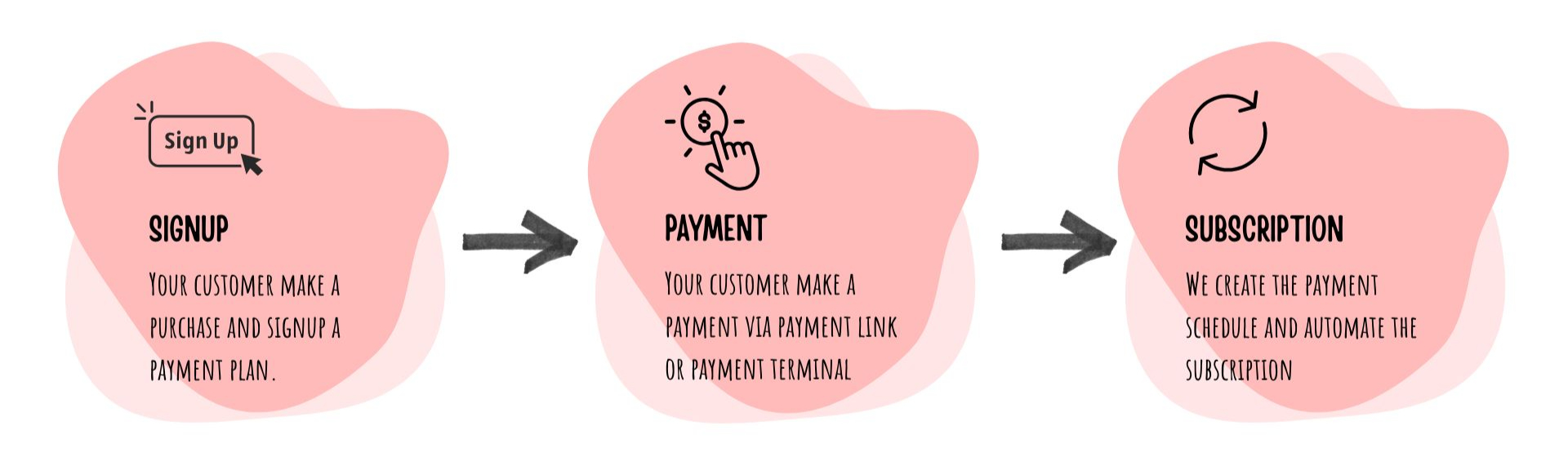
The payment journey
Configure packages, prices, promotions, charging frequency and customer emails in RewardlyPay.
Use a payment link or RewardlyPay terminal, with payment confirmation and receipts.
Charge the registered card on schedule and notify both parties when payment succeeds.
Less payment administration
Keep the collection workflow connected, from the next due date to the payment record.
Automated billing follows the configured payment schedule.
Send reminders before and after scheduled payments.
Failed payments can be retried, with a payment-link fallback if retries fail.
Payment synchronisation with Xero and QuickBooks is available; confirm the integration scope.
Payment success is not guaranteed. Confirm supported cards, notification settings, retry rules and accounting compatibility for your setup.
Start with the customer
Before choosing a billing cycle, decide what makes the next renewal worthwhile.
Ask: what will the customer receive, how often will they use it, and why would they choose to continue?
A clear offer gives your team something concrete to explain—and your customer something concrete to expect.
Discuss your subscription ideaBefore the first charge
Use this checklist to prepare your subscription walkthrough.
Make the amount, billing frequency and renewal terms visible before signup. Agree how authorisation will be recorded.
Define how customers request changes or stop renewals. Confirm what your team handles and what the platform supports.
Agree who follows up and what happens to service access while a payment remains outstanding.
Request a subscription-specific quote covering fees, settlement, refunds and disputes. Do not assume in-person rates apply.
These are implementation considerations, not claims of built-in cancellation, access control or plan-change automation.
Your next recurring relationship
Walk through a real subscription scenario with RewardlyPay.
Good questions
Bring a sample offer, intended billing frequency, expected subscriber numbers and existing systems. Include how you want to handle customer questions, failed payments and cancellations.
Request a subscription-specific quotation. Confirm transaction charges, any platform fees, settlement timing and refund or dispute costs before launch.
Confirm the supported workflow during your demonstration. Do not assume a self-service portal, prorated billing or automatic plan changes are included.
Treat collection and benefit fulfilment as separate requirements. Discuss the systems and staff actions needed to deliver the promised service or reward.
No. Card payments can fail. Agree a follow-up process and a service policy for unpaid subscriptions before accepting customers.
Yes—bring your requirements to the walkthrough and request a scoped proposal. Confirm feasibility, implementation work and costs before committing.