
Scheduled card charges
Collect instalments automatically against the agreed schedule.
PaymentOS / Card-linked instalments
Give customers an agreed payment schedule. Give your team a more organised way to collect.
RewardlyPay automates card-linked instalments, with tools to manage scheduled charges and follow up when payments need attention.

Manage the payment lifecycle
Collect instalments automatically against the agreed schedule.
Adjust deferred payment dates when a plan needs updating.
Retry failed charges, with a payment-link fallback when retries fail.
Link more than one card to a plan and retain a payment record trail.
Keep customers informed before and after scheduled payments.
Support online and in-person payment touchpoints. Confirm available methods for your setup.
Pre-authorisation is also described in RewardlyPay’s offering. Confirm eligibility, hold duration and release rules; it is not a guarantee that future payments will succeed.
Visibility for your team
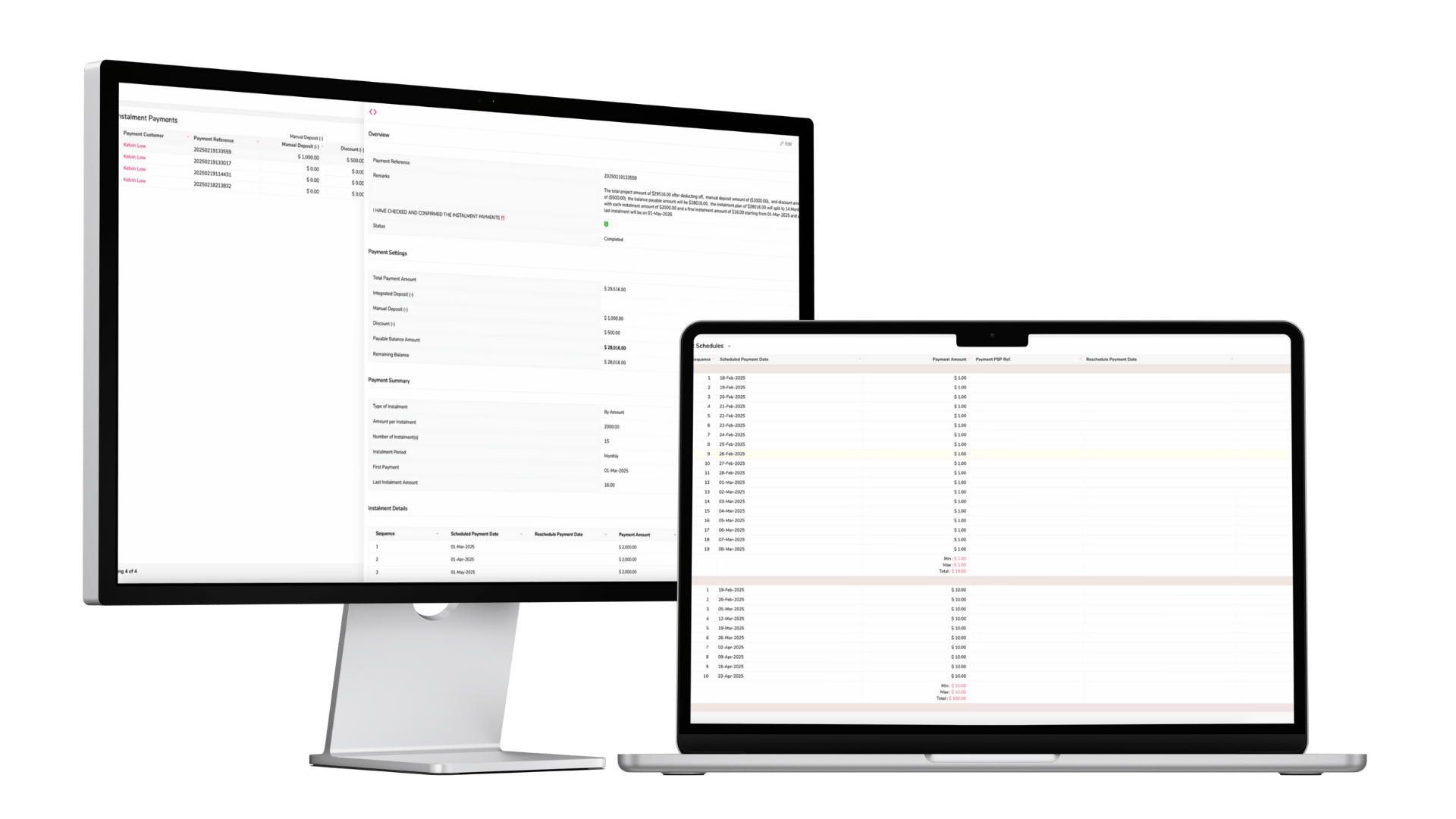
The RewardlyPay interface brings instalment settings, payment schedules and status into a dashboard view.
 Explore the dashboard
Make the arrangement tangible
Start with the total commitment—not just the size of the next payment.
For example, a S$1,200 purchase could be discussed as three payments of S$400. Put the dates, total payable and any additional charges in front of the customer before they agree.
Decide when the goods or services will be delivered, and what your team will do if a payment is missed.
Launch with clarity
Bring these decisions to your instalment-payment walkthrough.
Document the total payable, amounts, dates and authorisation to charge. Explain how changes and cancellations will be handled.
Confirm merchant eligibility, supported cards, processing fees, settlement timing, refunds and disputes.
Agree who follows up, how a revised schedule is approved and what happens to fulfilment while payment is outstanding.
These are planning considerations. Automated collection does not remove the risk of a declined card or unpaid balance, and does not establish an upfront funding arrangement.
Choose the right arrangement
Use a defined payment plan to discuss a particular purchase. For an ongoing service that renews, explore a subscription instead.
A clearer collection workflow
Discuss the payment schedule, customer experience and operational requirements.
Good questions
This page describes a card-linked collection workflow. It does not establish a loan, interest-free arrangement or third-party financing offer. Confirm the actual commercial terms before presenting a plan to customers.
Do not assume that scheduled collection includes upfront settlement or funding. Ask RewardlyPay to confirm when collected payments are settled to your business.
Agree the retry and follow-up settings during setup, and define who handles an unpaid balance. A payment schedule does not guarantee successful collection.
It is an illustration, not a preconfigured product or quotation. Confirm supported amounts, intervals, fees and customer eligibility before offering your own plan.
Agree the customer terms and operational workflow before launch. Confirm which actions your team can perform, what approvals are needed and how remaining payments are treated.
Bring a sample purchase, desired schedule, expected transaction volume and fulfilment process. Include the systems you use and your requirements for reporting, refunds and exception handling.