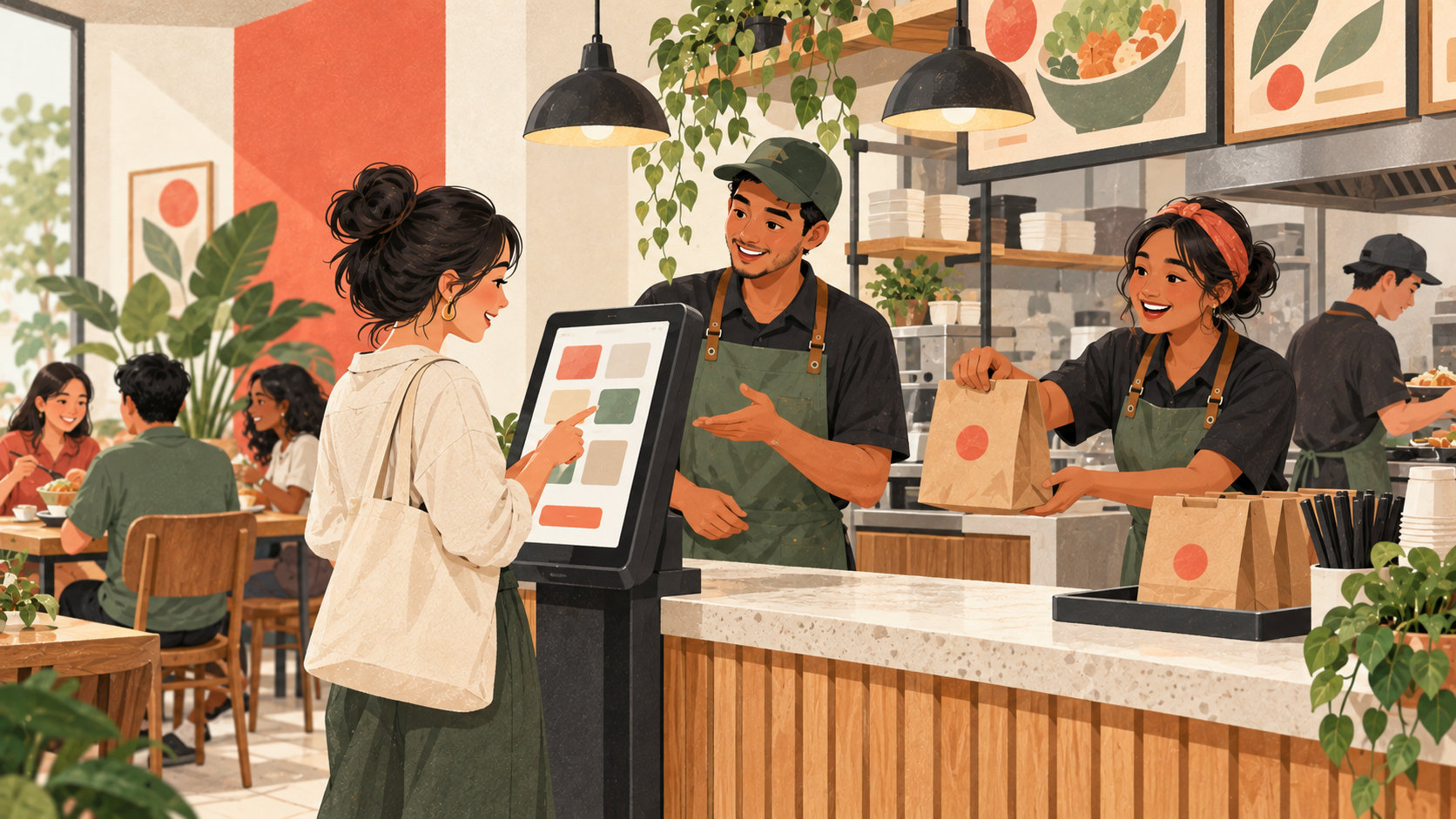

An online pre-order is a promise about what a customer will receive, where to collect it and when it will be ready. For a Singapore bakery, café or restaurant, the useful question is whether the team can deliver that promise during a busy shift. A good ordering page makes the choice clear; a good operating routine carries the order through to a confident handover.
Rewardly brings CommerceOS ordering, LoyaltyOS customer benefits and PaymentOS payment review into that conversation. This guide uses an illustrative bakery preparing celebration cakes for collection. It is a planning example, not a merchant case study or a claim of measured savings. Start with one outlet and a manageable menu, then expand after the team has tested the whole journey.
Start with the collection promise
Write down the offer before designing the page: which products can be ordered ahead, which outlet prepares them, how much notice the kitchen needs and who handles changes. A cake that needs preparation should not carry the same collection expectation as an available pastry. Explain these differences beside the relevant choice, so customers do not have to discover them after payment.
Rewardly’s online-ordering documentation describes outlet-specific ordering links and QR codes, daily order hours, advance orders, padding time and blackout dates. Orders reach Order Management and configured kitchen screens. These settings give the team ways to express its operating limits. They do not replace a capacity plan or establish that every product has its own automatic production schedule.
Make the online offer easy to understand
Show the product, the available choices, the collection location and the amount payable clearly. For the bakery example, a short explanation of size, flavour and collection arrangements can prevent repeated clarification calls. Keep optional extras distinguishable from what is already included. Review the experience on a phone, including the basket, because a clear desktop page can become confusing on a smaller screen.
Singapore’s price-transparency guidance, published on 7 September 2020, addresses mandatory charges, optional extras and genuine discounts. It is established context, not a new announcement today. Use it as a reference when reviewing how charges and offer conditions are presented. An attractive headline should lead to an understandable final purchase decision.
Choose the right storefront for the job
A shareable ordering link can suit a straightforward menu. A branded storefront may need a more tailored journey: product discovery, outlet selection, personalisation and fulfilment information. Rewardly’s branded eCommerce offering starts by agreeing that workflow with the merchant. The cake-shop showcase is a fictional prototype; its sample products and prices do not represent a live merchant or an activated payment service.
Bring your real requirements to the prototype review. Ask which catalogue details are shared, how orders reach the chosen outlet and which member and payment journeys are included. Confirm the proposal before promising a feature to customers. A useful design decision is one staff can explain and fulfil, rather than an extra screen that makes the order harder to complete.

Give advance payment a clear meaning
Rewardly documents an option to require payment for advance orders, together with a configured order status after payment and customer confirmation messages. Decide what the customer should understand at that point. A payment confirmation and a ready-for-collection message describe different moments. Test the wording and the supported status notifications, including what happens when a customer closes the browser before returning to the confirmation page.
PaymentOS reports help the team review payments by method and inspect the relevant outlet, date range and source, including online orders. Compare payment records with order details when investigating a query. A report total alone does not tell the counter team that a particular cake is ready. Agree who checks an uncertain payment and who communicates with the customer before preparing a duplicate order.
Offer a useful reason to return
A first collection is also a chance to make the next visit easier. An illustrative bakery might offer an eligible member a benefit for a later purchase. LoyaltyOS voucher controls include validity, redemption limits and qualifying conditions. Keep the benefit relevant and the explanation brief. Avoid adding several overlapping offers before staff can confidently explain which one applies to a normal basket.
Check the actual member journey across the enabled online and counter channels. A branded website does not by itself prove that every points, stamp or voucher rule works identically everywhere. Show the customer how to identify their membership and where the benefit can be used. The voucher redemption guide provides a separate checklist for eligibility, expiry and the remaining payment.
Rehearse the exceptions before launch
Run a small set of realistic orders with the people who will prepare and hand them over. Include an unavailable collection date, an expired benefit, a payment question and a request to change the pickup outlet. Record the supported response and the staff member responsible. Cancellation, refund and reward reversal rules need agreement; do not assume each action automatically reverses all the others.
The Food Services Industry Digital Plan announcement of 16 July 2025 places staff skills and data protection alongside digital solutions. This older industry context supports a practical lesson: launch planning includes people and working habits. It does not establish grant eligibility or approval for a particular Rewardly package.
Review service quality before widening the offer
After a small launch, review collection questions, changed orders, missed handovers and payment exceptions. Compare suitable periods and note other promotions or seasonal effects. Use CommerceOS order details, LoyaltyOS benefit rules and PaymentOS records to investigate specific problems. These observations can guide improvements, but a rise in orders does not by itself prove that a loyalty offer caused extra profit.
Book a Rewardly walkthrough with one product, one collection scenario and one proposed member benefit. Ask to follow the customer’s order through preparation, payment review and collection. Confirm the enabled channels, operating hours, messages and exception process before promoting the link. The goal is a promise customers understand and a routine your team can deliver consistently.