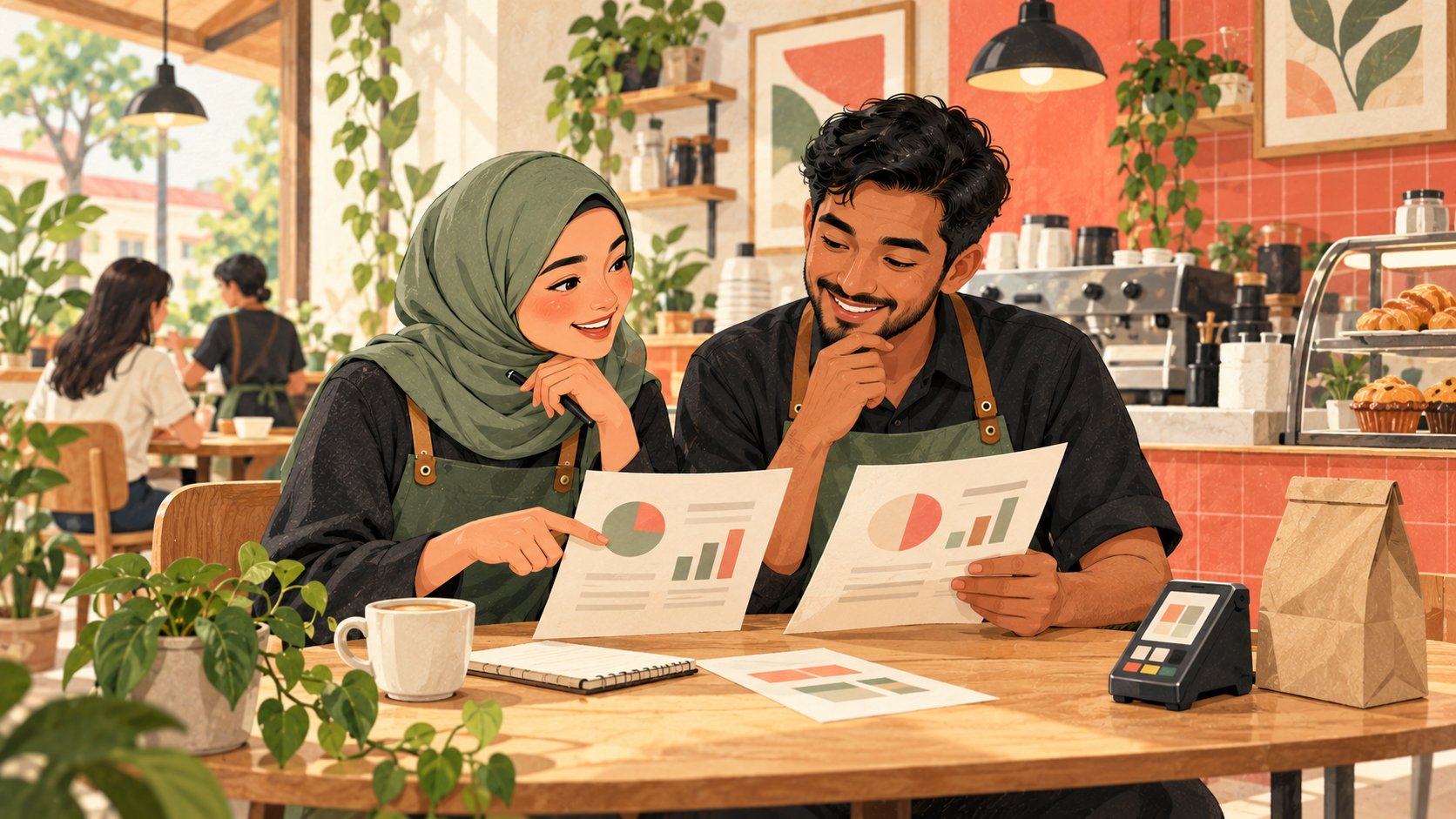

A national sales recovery does not tell you whether yesterday’s lunch guests will come back. For a Singapore café or restaurant, the useful question is smaller: can someone order easily, receive the right meal, pay with confidence and understand a reason to return? Start with that journey before offering another discount.
Rewardly connects selling and fulfilment through CommerceOS, member benefits through LoyaltyOS, and checkout records through PaymentOS. This guide shows how to use those parts in a measured repeat-visit pilot. Features and channels depend on the setup enabled for your outlet.
Read September’s recovery at the right scale
The Singapore Department of Statistics release of 5 November 2026 reports that F&B services sales increased 1.0% year on year in September 2026. Fast-food outlets grew 7.6%, restaurants 2.6% and cafés 0.1%; food courts and other eating places fell 4.2%. These are September results, not a reading of November trade.
Singapore Business Review’s 6 November coverage also reports the uneven recovery and an online share of 21.1% of September F&B sales. That national share is context, not a target for your outlet. Sales value does not establish profit, the number of returning customers or the effect of a loyalty offer.
Our practical response is to compare like with like inside your business. Keep weekdays, meal periods, outlets and ordering channels separate. A busier delivery evening can hide a weaker dine-in lunch. Before changing a reward, find out which customer journey needs attention.
CommerceOS: make the first visit easy to repeat
Choose an ordinary order to rehearse. At a fictional neighbourhood noodle shop, a guest orders a bowl with a drink and collects it during a short lunch break. The team checks the chosen options, preparation instructions and collection point. The aim is a dependable experience the guest can fit into another working day.
Rewardly’s POS, QR ordering, kiosk and online ordering can support different ways to buy. Its menu setup assigns selected products to outlets; product visibility controls the channels where items appear. Check the actual menu seen by the customer, including any dine-in or takeaway price differences.
For the pilot, use one outlet and a manageable channel. Ask staff to try an unavailable item, a changed option and a collection question. Confirm the preparation handover using the tools your kitchen uses. Adding a new ordering screen will not fix unclear responsibility for checking or handing over the meal.
LoyaltyOS: choose one understandable reason to return
A repeat visit needs a relevant benefit, not a complicated explanation. A product stamp card may suit a regular bowl purchase. Points can suit varied baskets, while a voucher can define a particular return offer. Use the loyalty program chooser to compare the tools before combining them.
In our fictional noodle-shop pilot, the merchant chooses one named bowl as the qualifying product and a drink voucher as the completion reward. Rewardly’s stamp-card documentation explains that a Product rule matches the specific selected products. Selecting a category only helps find products; it does not make everything in that category qualify.
The reward must be created and attached to the relevant challenge. Set the card’s validity, repeat limit and member visibility, then describe the offer in everyday language. At the POS, attach the member before payment. Qualifying completed sales progress the card automatically; staff should verify the resulting balance in the member experience.
Test the named bowl, a different bowl and two bowls in one basket. Also test a completed card, a reward redemption and a correction. Agree how staff handle exceptions before launch. Do not assume a return or cancellation automatically reverses every benefit in every channel; demonstrate the configured workflow.
PaymentOS: close the order before counting the result
A reward conversation should not distract staff from confirming payment. Use the final basket amount, apply the eligible benefit and follow the confirmation process for the chosen tender. Manual PayNow recording and integrated payment confirmation are different workflows. A customer’s phone image alone is not the outlet’s payment record.
Rewardly payment reports separate payments by method, discounts, PayNow payouts and manually matched PayNow transfers. Filter the relevant outlet, period and source, then export records if needed. These views help investigate exceptions; they do not replace the payment provider’s settlement information or your ingredient and operating cost records.

Measure a return purchase, not just a redeemed gift
Write down the pilot’s start date, eligible products and review window. For example, identify members who made a qualifying purchase during one week, then check whether those same members buy again within the next two weeks. This is a suggested manual analysis using your available records, not a claim of an automatic retention dashboard.
If 12 of 40 eligible members return in that window, the observed return rate is 30%. This fictional calculation is not a benchmark or predicted result. Compare it with a similarly defined earlier group only after both groups have had the same opportunity to return. Newly joined members should not receive a shorter measurement window.
Review what those return orders contributed after the actual reward, ingredients, packaging and channel or payment charges. Separate rewards issued from rewards redeemed, and keep purchases without a recorded member outside member-level comparisons. A higher redemption count alone cannot show that the offer created extra visits or covered its cost.
Decide what to keep after the pilot
Bring three observations to the review: where ordering caused friction, whether guests understood the reward, and whether payment exceptions were resolved. Keep a simple offer that staff can explain and customers can use. If the rules caused confusion, revise those rules before adding tiers, referrals or more campaigns.
Bring your menu, one proposed benefit and a recent payment example to a Rewardly walkthrough. Ask to see CommerceOS, LoyaltyOS and PaymentOS handle the same order from selection through a return visit. A useful demonstration should show your team what to do next and which responsibilities remain with the merchant.