
Integrated POS Payments: Why Reconciliation Matters for Singapore Merchants
- Kelvin Low

- Jul 1
- 4 min read

Payment is one of the most important moments in any F&B or retail transaction. Customers expect it to be fast, flexible, and reliable. Staff need it to be simple during busy periods. Managers need the numbers to match at the end of the day.
That is why integrated POS payments matter.
When payments are connected to the POS system, merchants can reduce manual entry, improve checkout speed, simplify reconciliation, and keep better records across outlets. For Singapore restaurants, cafes, hawkers, food courts, retail shops, and franchises, this can make daily operations much easier to control.
What Are Integrated POS Payments?
Integrated POS payments connect the payment flow directly with the POS transaction.
Instead of staff keying the amount separately into a payment terminal, the POS sends the transaction amount to the payment device or payment flow. Once payment is completed, the result is linked back to the sales record.
Depending on the setup, integrated payments can support:
Card payments
PayNow or QR payment flows
E-wallets
Tap-to-pay options
Online payment links
QR ordering payment
Deposit or preorder payment
Multi-outlet payment reporting
The goal is not only to accept more payment methods. The goal is to connect payment data with the sale, customer, reward, and report.
Why Manual Payment Entry Creates Risk
Manual entry can look harmless when transaction volume is low. But during lunch rush, dinner service, retail peak hours, or event operations, small mistakes can add up.
Common problems include:
Staff enter the wrong amount into the terminal
Payment is completed but not matched clearly to the POS order
Refunds and voids are hard to trace
End-of-day settlement does not match POS sales
Managers spend time checking slips, reports, and spreadsheets
Multi-outlet reporting becomes inconsistent
These issues are not just accounting problems. They also affect staff confidence, customer experience, and management visibility.
Reconciliation Should Be Easier
Reconciliation is the process of checking whether sales, payments, refunds, discounts, and settlement records match.
For many merchants, this is still a manual task. A manager may compare POS sales reports, payment terminal summaries, bank settlement records, cash movement, vouchers, and delivery platform data.
Integrated POS payments help by keeping transaction data connected from the beginning. When each payment is linked to the right order, it becomes easier to review:
Sales amount
Payment method
Payment status
Refunds or voids
Discounts and vouchers
Outlet performance
Staff shift records
Customer loyalty activity
This gives merchants a cleaner view of what happened during the day.
Faster Checkout Supports Better Service
Checkout speed matters in Singapore F&B and retail environments, especially when queues build quickly.
Integrated payments can help staff complete transactions with fewer steps. The POS sends the correct amount, the customer taps or scans, and the result is recorded automatically.
This can help:
Reduce queue time
Lower payment keying errors
Improve staff confidence
Keep service moving during peak periods
Make handover between shifts cleaner
When checkout feels smooth, customers notice. When payment mistakes are rare, managers notice too.
Payments Should Connect With Loyalty
Payment is also a useful moment for customer engagement.
If POS, payment, and loyalty are connected, a transaction can trigger points, stamps, vouchers, membership updates, or campaign eligibility. This helps customers earn rewards as part of the normal checkout flow.
For merchants, payment-linked loyalty can help answer questions such as:
Did this payment earn points?
Was a voucher redeemed?
Which customers returned after receiving an offer?
Are repeat customers spending more?
Which campaigns created actual sales?
This is why integrated payments should be viewed as part of a wider growth system, not only a payment terminal feature.
QR Ordering and Online Payments Need the Same Connection
For restaurants and cafes using QR ordering, payment integration is just as important.
Customers may scan, order, and pay from the table or before pickup. If that payment is disconnected from the POS, staff may still need to check multiple dashboards or manually confirm payment status.
A stronger setup connects:
QR order
POS record
Kitchen or fulfilment flow
Payment status
Customer profile
Loyalty activity
Sales reporting
This helps teams avoid confusion and keep orders moving.
What Singapore Merchants Should Compare
Before choosing an integrated payment setup, ask:
Which payment methods are supported?
Does the payment flow connect directly to POS transactions?
Can staff avoid manually keying transaction amounts?
How are refunds, voids, and failed payments handled?
Can payment status be seen clearly?
Can reports be filtered by payment method?
Does it support multiple outlets?
Can payments connect with loyalty rewards?
Does QR ordering payment sync with POS?
Are payment fees and settlement timelines clear?
Clear answers to these questions can prevent operational headaches later.
Why Rewardly Fits This Use Case
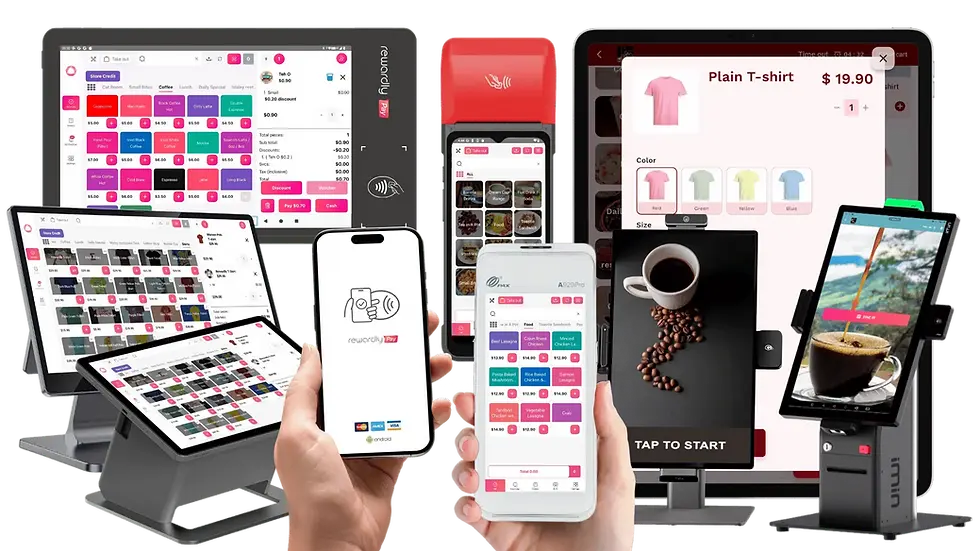
Rewardly helps Singapore F&B and retail merchants connect POS, payments, QR ordering, loyalty, inventory, and reporting in one operating platform.
With connected payments, merchants can reduce manual payment steps, keep transactions linked to sales records, and make loyalty or voucher activity easier to track.
For busy outlets, this means checkout can move faster. For managers, it means reports can be clearer. For customers, it means payment and rewards can feel like one smooth experience.
FAQ
What are integrated POS payments?
Integrated POS payments connect the payment transaction directly with the POS sale, so the payment amount, status, and method are linked to the correct order or receipt.
Why is payment reconciliation important?
Payment reconciliation helps merchants check whether POS sales, payment records, refunds, vouchers, and settlement amounts match. This reduces errors and improves financial visibility.
Can integrated payments reduce staff mistakes?
Yes. When the POS sends the correct amount to the payment flow, staff do not need to manually key the amount into a separate terminal, reducing the chance of payment errors.
Can POS payments connect with loyalty rewards?
Yes. When payments, POS, and loyalty are connected, customers can earn or redeem rewards as part of the checkout journey, and merchants can track campaign results more clearly.
Is integrated payment useful for QR ordering?
Yes. QR ordering is stronger when order, payment, POS, fulfilment, and loyalty data are connected in one workflow.
What should merchants ask about payment fees?
Merchants should ask about transaction fees, settlement timelines, supported payment methods, refunds, chargebacks, hardware requirements, and whether fees vary by payment type.
What's next?
Want payments, POS, loyalty, and reporting to work together?
Book a Rewardly demo to see how connected payments can reduce manual work and make reconciliation easier for your business.


Comments